
Concrete Steps Construction in San Rafael CA - A Solid Entry on a Packed Base
Cracked, tipped or crumbling front steps? We tear them out and build new ones on a base we pack firm first.
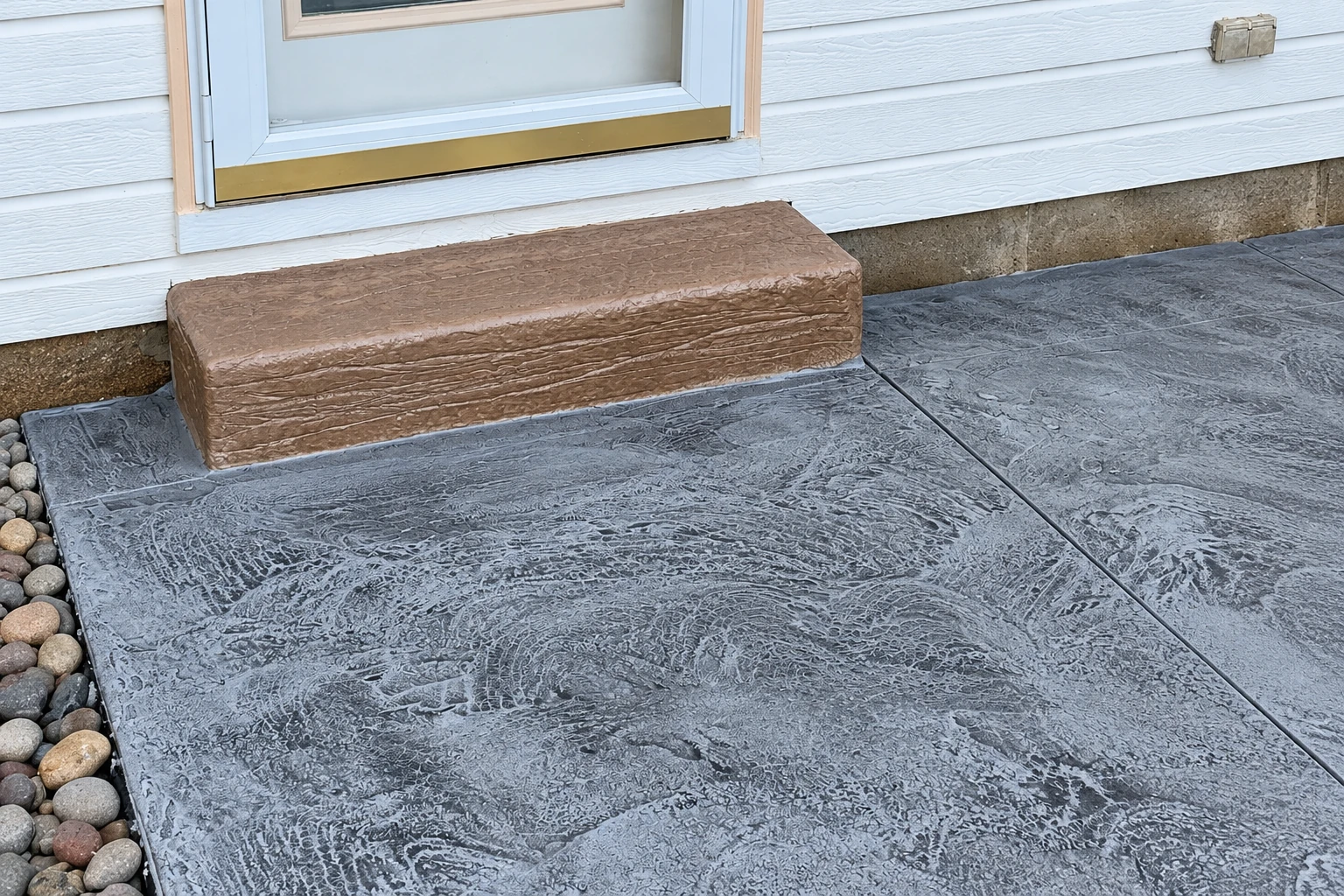
- Licensed and insured.
- Free in-person estimates.
- We respond within 1 business day.
What does it take to replace concrete steps in San Rafael?
Concrete steps construction in San Rafael means building forms at your entry, then pouring and finishing concrete into a set of steps that sits on the ground, ties into a landing or the house foundation, or spans open space.
Most calls start with a step that's cracked across the tread, a set that's tipped toward the house, or an old stoop that's pulled away from the porch. Before anyone talks price, I want to know what's under it, because steps that settled once usually sat on dirt nobody packed. The price moves with how many steps you need, whether they meet a landing or the foundation, whether the old set has to be broken out and hauled off, and whether you go precast or poured. The schedule turns on whether the city wants a permit and on the cure, the wait before the concrete is hard enough to use, and your written estimate lays out each step so you can see where the money goes. Premier San Rafael Concrete Company is licensed and insured, based in San Rafael, and we build steps in cities from Petaluma down to Berkeley.
How we handle concrete steps construction
On most jobs we break out the old steps first and dig down past the loose dirt, because steps that rest on fill nobody packed will settle right along with it. We pack the base before the forms go up, then build the forms to the size and number of steps your door needs. How the steps are supported, on the ground, off a landing or across an open span, decides the rebar, the steel that holds the concrete together, and the footing, the base that carries the weight, so we size both for your entry. We pour when the day isn't at its hottest, float the surface smooth and then pull a broom across the treads, which leaves a light texture so they grip when they're wet. Before any of that, I'll help you weigh precast against poured for your entry, since neither one is right for every house.
Steps often connect to more than the walk in front of them. If yours tie into a new house or an addition, we plan them with the slab foundation building or the foundation installation so the landing and the footings line up, because pouring to one plan beats patching two together later.
Steps that sit on the ground
These suit a short rise from the walk to the door, where the weight goes straight down into the ground. The base does nearly all the work here, so that's where we spend our time.
Steps tied to a landing or the house
These suit a porch landing, a door set high or a stair that crosses open space, because the steps tie into something else that has to carry them. The footing and steel change with that, and if I think an engineer should look at it, I'll tell you before we price it.
If a step has started rocking or pulled away from the door, call (628) 234-2042 now rather than waiting for it to get worse.
What happens after you call about new concrete steps?
Here's how a steps job runs from the first call to the day you walk on them, and who does what along the way. I'm the one you'll see at the estimate and at the pour.
Call or send us a message
Phone (628) 234-2042 or send the form, and we'll get back to you to set a time to come out. Tell us roughly how many steps you have so we know what we're walking into.
I measure and write it up
I come out myself, measure the entry and ask what the steps have to carry and what goes on top of them, like a railing or a landing. You get a written estimate that lays out each step of the job and its cost, so you can see what precast or poured would do to the number.
We settle permits, then pour
Before the pour we settle permits, layout and where the water goes, and if the city sends your job through plan review, the first review could take up to 3 weeks. I'm on site with our crew from forms to finish, and we leave the steps blocked off until they've cured.
Get a written estimate for your new steps
Send the form and we'll reply within one business day to set a time for me to come out. The estimate is free and done on site, and there's no pressure to book.
(628) 234-2042Concrete steps construction and permits in San Rafael
San Rafael issues a General Permit Requiring Plan Review for residential work, and the city's list names remodels, residential repairs, decks and retaining walls, but not concrete steps. That leaves it open whether your steps need one, so I check with the office that covers your address, and when a permit is needed we handle the application and the inspections. New applications in the city now go in online through OpenGov, which we take care of when we file. If the old steps go into a debris box that has to sit on the street or sidewalk, the city requires a separate permit for the box, so we sort out where it goes before demolition day.
A lot of the steps we replace around here are older poured stoops that have settled at one corner or pulled away from the house, and we see the same thing on jobs in San Anselmo and Mill Valley. Lots tend to be tight, so we plan how the concrete gets from the truck to your door before the forms go up.
Concrete steps questions from San Rafael homeowners
How much do concrete steps cost in San Rafael?
Concrete steps across the US usually cost about $100 to $500 per step installed, and that's a national figure, not our price. Your number depends on how many steps you need, whether they tie into a landing and whether old steps have to come out first. My written estimate breaks it down so you can see each part.
Should I choose precast or poured concrete steps?
Precast steps usually cost less because they're hollow and easier to assemble, while poured steps cost more but come in a much wider range of sizes. If your entry needs an odd width or height, poured is usually the answer, and for a simple set precast can save you money. I'll tell you which one fits once I've measured.
How long do concrete steps last?
Concrete steps last about 30 to 40 years with proper care and upkeep, so treat them as a long-term part of the house. Plan on steady upkeep after the build, like watching for cracks and settling, and know that the base they sit on decides a lot of that life.
Who can build concrete steps in California?
In California, the state contractor licensing board defines a concrete contractor as one who forms, pours, places, finishes and installs concrete, including flatwork like walks and paving. An unlicensed person can only take on minor work up to $1,000, and only when the job needs no permit and they don't employ anyone. Ask to see a license before anyone breaks out your old steps.
How long do new concrete steps need to cure before I can use them?
One construction guide says stair concrete needs at least 7 days of curing to reach adequate strength and durability, so plan that week into your schedule. We block the steps off and tell you when they're ready, and if they're your only way in, we work out another path with you at the estimate.
What causes concrete steps to sink, and can they be fixed?
Steps usually sink because what's under them settled, and uneven settling should be fixed promptly because even a small change in height can trip someone. Whether we repair the set or replace it depends on what's underneath, which I can only tell once I've looked.
Related services for new steps and entries
If you're building a new house or addition, the slab and the entry steps should be planned together so the landing height and door threshold come out right.
Steps that tie into the house depend on the foundation, so when a new foundation goes in, we can set the footings for the steps with it.
Send photos of your steps for an estimate
Call (628) 234-2042 until 10 PM on weekdays and 11 PM on weekends, or send the form with photos of your entry, the number of steps and whether they meet a landing.